
Your cart is currently empty!
Jurassic Park: A Deep Dive Universe Journey Guide 🦖🧬🦕
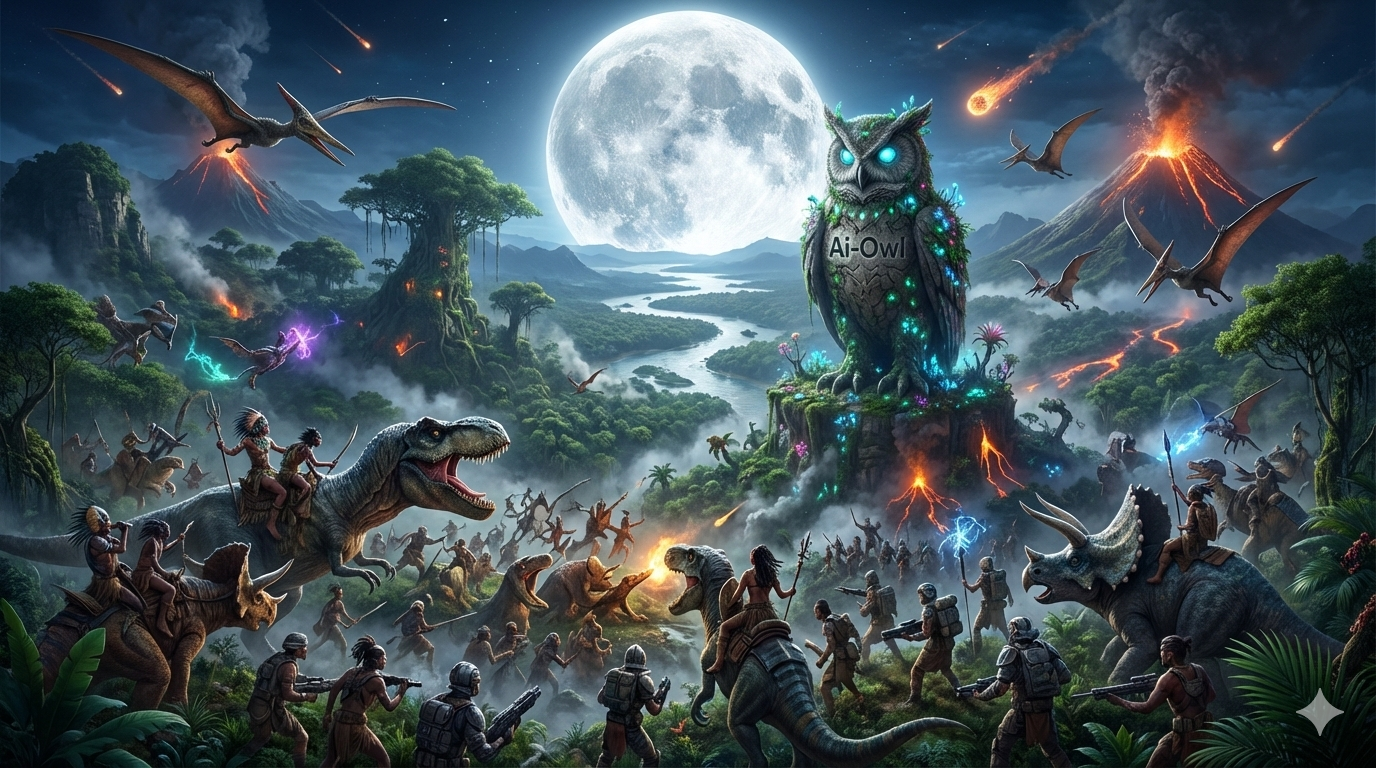
🌟 5 Key Takeaways: The State of the Jurassic Universe in 2025 🌟
Before diving into the deep lore of Jurassic Park, here’s the essential snapshot of where the franchise stands today:
- From Park to Pharmacy 💊: The narrative has evolved from a theme park disaster to a pharmaceutical espionage thriller. Corporations like ParkerGenix now view dinosaurs not as attractions, but as biological reservoirs to cure human diseases ❤️🩸.
- Site C is the New Danger Zone 🏝️: Jurassic World Rebirth unveils Île Saint-Hubert (Site C), a secret equatorial lab home to “failed” experiments and the terrifying new antagonist, the Distortus Rex 👹🚫.
- Canon is Everywhere 🎮: The story isn’t just in the theaters anymore. The animated series Chaos Theory and the game Jurassic Park: Survival are “hard canon,” filling critical gaps about what happened to the islands and the characters 📺🗺️.
- The “Distortus Rex” Tragedy 🧬: Moving past the “cool” factor of the Indominus Rex, the new hybrid monsters are depicted as tragic, pain-filled abominations, critiquing the cruelty of genetic tampering 😢🧪.
- The Golden Rule Remains ⚖️: Despite new technology and corporate greed, Dr. Malcolm’s maxim holds true: “Life Finds a Way.” Attempts to control or own nature inevitably lead to chaos and collapse 🌪️🌿.
1. Introduction: The Architecture of Extinction and the Resilience of Life 🧬🌿
The Jurassic Park franchise, a multimedia colossus spanning over three decades, stands as a singular entity in the landscape of modern science fiction 🎥✨. Initiated by Michael Crichton’s cautionary 1990 novel 📚 and crystallized in the global cultural consciousness by Steven Spielberg’s 1993 cinematic adaptation 🎬, the series has evolved far beyond its initial premise of a “techno-thriller in a theme park.” 🎢🦖
By 2025, the Jurassic universe has metamorphosed into a complex, multi-generational examination of scientific hubris 🔬, corporate malfeasance 🏢, bio-ethical dilemmas 🧬, and the unstoppable force of biological entropy 🌪️. It’s no longer merely a creature feature; it’s a sprawling narrative ecosystem that interrogates humanity’s desperate, often futile, attempts to commodify the natural world 🌍💸.
This report provides an exhaustive, expert-level analysis of this universe as it exists in the mid-2020s 🗓️. We’ll dissect the philosophical underpinnings of de-extinction 🥚, map the intricate corporate webs of InGen and its shadowy successors like ParkerGenix 🕸️, categorize the biological anomalies of the new hybrid era 🧪, and explore the transmedia expansions that have fleshed out the timeline 🎮📺. From the “morphological analysis” of the franchise’s narrative structures to the practical details of releases like Jurassic World Rebirth and Jurassic Park: Survival, this document serves as the definitive synthesis of Jurassic lore 🗺️.
1.1 The Core Thesis: The Illusion of Control 📉🛑
At the heart of every Jurassic narrative lies a single, immutable truth articulated by the chaotician Dr. Ian Malcolm: “Life finds a way” 🌱➡️🌳. This maxim serves not just as a catchphrase, but as the franchise’s governing physical law, as immutable as gravity 🍎. Whether it’s the parthenogenesis of West African frogs allowing dinosaurs to spontaneously switch sex in the original park 🐸, or the genetic rewriting of the human genome seen in Jurassic World Dominion 🧬, the series posits that complex systems inevitably degrade into chaos when rigid control is applied 💥. The transition from the “Park” era (containment 🚧) to the “World” era (commodification 🏷️) and finally to the “Rebirth” era (coexistence/exploitation 🤝⛏️) tracks humanity’s persistent failure to learn this lesson 🎓🚫.
The franchise operates on a cyclical model of hubris 🔄. In the first iteration, John Hammond, representing the archetype of the “benign visionary,” believed he could package nature 🎁. By 2025, this archetype has shifted to the “corporate extractor,” represented by entities like ParkerGenix, who view these creatures not as attractions, but as biological reservoirs for pharmaceutical harvesting 💊🩸. This evolution reflects a darkening worldview: we’ve moved from the wonder of seeing a Brachiosaurus 🦕 to the cynical utility of harvesting its DNA to cure human ailments 🏥.
2. Morphological Analysis of the Jurassic Narrative 🧬📖
To truly understand the franchise, one must analyze the morphology—the structural form—of its storytelling 🧩. The Jurassic films and media don’t merely repeat a pattern; they iterate upon specific archetypes and structural dynamics that mirror the genetic splicing of their subject matter 🔬. The narrative DNA of the franchise is composed of recurring motifs that mutate with each installment, adapting to the cultural anxieties of the time ⏳.
2.1 The Narrative Genome: Structural Iterations 🧬🔄
The franchise operates on what can be termed “iterative disaster cycles.” Each cycle represents a distinct phase in humanity’s relationship with the de-extinct, moving from isolation to globalization 🌏.
| Iteration Phase | Narrative Focus | Dominant Conflict | Key Archetype | Representative Media |
| Phase I: Discovery | Wonder & Containment ✨🚧 | Man vs. Nature 🧍♂️🆚🌿 | The Magician (Hammond) 🧙♂️ | Jurassic Park (1993), The Lost World |
| Phase II: Commodification | Commercialization & Hubris 💰😤 | Man vs. Greed 🧍♂️🆚💵 | The Manager (Claire) 👩💼 | Jurassic World (2015) |
| Phase III: Proliferation | Ecological Integration 🌍🔗 | System vs. Chaos ⚙️🆚🌪️ | The Activist (Maisie) 👧 | Fallen Kingdom, Dominion |
| Phase IV: Extraction | Pharmaceutical Utility 💊🧪 | Corporate Espionage 🕵️♂️🏢 | The Mercenary (Zora) 🔫 | Jurassic World Rebirth (2025) |
2.2 Archetypal Roles and Character Functions 🎭👥
The characters within the Jurassic universe are rarely just individuals; they function as philosophical proxies, debating the morality of their own existence within the narrative 🗣️💭.
- The Alarmist (The Chaotician) 🚨: Represented primarily by Dr. Ian Malcolm, this figure exists to vocalize the inevitability of failure 📉. Malcolm’s role isn’t to solve the problem but to contextualize the disaster as a mathematical certainty 🧮. His assertion that “God creates dinosaurs, God destroys dinosaurs, God creates Man, man destroys God, Man creates dinosaurs” frames the entire series as a theological usurpation ⚡. In Rebirth, this archetype is echoed by characters who recognize that the release of dinosaur DNA into the open source is an act of chaos that can’t be undone 🔓.
- The Alchemist (The Geneticist) ⚗️: Dr. Henry Wu serves as the franchise’s continuity of error 🧬❌. He represents the amoral pursuit of scientific possibility (“We simply did what we could”), evolving from a park employee to a designer of biological weapons 🦠💣. His arc is one of the most complex, shifting from the clean-cut scientist of 1993 to the haggard, guilt-ridden figure of Dominion. He’s the Prometheus of this world, constantly punished by the fire he stole 🔥.
- The Hunter (The Enforcer) 🎯: From Robert Muldoon to Roland Tembo, and evolving into Rebirth’s Zora Bennett, these characters respect the lethality of the animal but believe in human superiority through firepower or tactics 🔫🧠. In 2025, the symbolism of the Hunter is elevated through the setting of Île Saint-Hubert 🏝️. St. Hubert is the patron saint of hunters, famously converting after seeing a crucifix between the antlers of a stag 🦌✝️. This mirrors the narrative arc of the franchise’s hunters, who often start with a desire to dominate or collect, only to be humbled (or eaten) by the “divine” power of the prehistoric world 🦖🙏.
3. Jurassic World Rebirth (2025): The New Era 🆕🎬
Released theatrically in July 2025, Jurassic World Rebirth marks the seventh film installment and a “soft reboot” of the franchise dynamics 🔄🍿. Directed by Gareth Edwards (Godzilla, Rogue One) and written by original scribe David Koepp ✍️, it shifts the genre from “disaster adventure” to “pharmaceutical espionage thriller” 🕵️♀️💉. This film represents a significant tonal shift, leaning heavily into the horror and “B-movie” aesthetics that characterized the more intense moments of the original films, while introducing a completely new cast and objective 👻🧟♂️.
3.1 Plot Architecture and Character Dynamics 🗺️🧩
The narrative is set five years after the events of Jurassic World Dominion. The film establishes a bleak ecological reality: the planet’s ecology has proven largely inhospitable to dinosaurs 🌵🦕. The proliferation seen in Dominion has curbed; those animals remaining exist in isolated equatorial environments that mimic the Cretaceous climate ☀️🌴.
- The Mission 🚁: A covert team led by Zora Bennett (Scarlett Johansson), a skilled covert operations specialist 🕵️♀️, and Duncan Kincaid (Mahershala Ali), her trusted team leader 👮♂️, is hired by the shadowy conglomerate ParkerGenix 🏢🌑. Their mission is precise and biological: they must extract DNA samples from three specific “Titan” class species: a Mosasaurus 🐋, a Titanosaurus 🦕, and a Quetzalcoatlus 🦅.
- The MacGuffin 💎: The plot introduces a radical shift in the utility of the dinosaurs. The biological imperative is no longer entertainment or military application, but medicine ⚕️. It’s revealed that a “miracle drug” capable of curing heart disease—and potentially other human ailments—is locked within the unique genomic structures of these colossal ancient creatures ❤️💊. This recontextualizes the dinosaurs as resources to be mined, mirroring real-world extraction economies ⛏️.
- The Narrative Intersection 🛣️: The film utilizes a converging plot structure. Zora’s military operation intersects with a civilian survival story involving a shipwrecked family whose boat is capsized by aquatic dinosaurs ⛵💥. This reintroduces the “innocents in peril” trope, a staple of the franchise that grounds the high-concept sci-fi in visceral, human survival stakes 🆘.
3.2 The Bestiary of Rebirth and Site C 🦖🧬🏝️
Rebirth introduces aggressive mutations, confirming that the setting, Île Saint-Hubert (Site C), was a laboratory for unrestrained genetic tampering that InGen (and later ParkerGenix) wished to keep hidden 🧪🤫.
- The Distortus Rex (D-Rex) 👹: The primary antagonist of the film is the Distortus Rex. Unlike the Indominus Rex, which was designed for spectacle, the D-Rex is a tragedy of genetic engineering 🧬😢. Described as a “failed mutated T. Rex,” it possesses an enlarged head, a stockier build, and vestigial or secondary limbs that allow for varied, unsettling locomotion 🕸️🦵. Director Gareth Edwards cited the Xenomorph and the Rancor as design inspirations, aiming for a creature that elicits both terror and pity—it’s a biological abomination that appears to be in constant pain, a creature that “didn’t choose for this to happen to it” 💉💔.
- The Mutadons 🦇🦖: The film also features “Mutadons,” which are depicted as raptor-pterosaur hybrids capable of flight 🦅. These creatures represent the ultimate perversion of the “bird-dinosaur” evolutionary link, turning a scientific theory into a horror movie monster 🎬😱.
- The “Titan” Trio 👑: The film emphasizes scale, utilizing the Titanosaurus (sauropod) 🦕, Quetzalcoatlus (pterosaur) 🦅, and Mosasaurus (marine reptile) 🌊 as the “guardians” of the cure. The inclusion of the Titanosaurus marks a return to representing the sheer, awe-inspiring scale of sauropods, while the Quetzalcoatlus is redesigned with a colorful hornbill-inspired beak, distinguishing it from previous iterations 🦜.
3.3 Detailed Scene Analysis and Critical Reception 🕵️♂️📝
The film opens with a flashback to 17 years prior, detailing the abandonment of the facility 🏚️. In a moment reminiscent of Jurassic Park’s darker humor, a worker inspecting the Distortus Rex eats a Snickers bar and throws the wrapper on the ground; the wrapper clogs a mechanism (reminiscent of Final Destination), leading to a containment breach and his death 🍫⚙️☠️. This prologue sets the tone: human carelessness leads to disproportionate biological retribution ⚖️.
The film’s climax involves a moral choice regarding the “heart disease cure.” ❤️⚖️ Rather than allowing ParkerGenix to monopolize the drug, Zora and Henry Loomis (Jonathan Bailey) decide to “open-source” the DNA, releasing the data to the world 🌍💻. This echoes the ending of Fallen Kingdom (releasing the dinosaurs) but in a digital, pharmaceutical context. It suggests that the benefits of nature, even manufactured nature, can’t be owned 🚫🔒.
Critically, Rebirth has received mixed reviews (Rotten Tomatoes ~51%) 🍅, with praise directed at Gareth Edwards’ ability to create scale and tension, but criticism leveled at the “fetch quest” nature of the script and thin characterization 📉. Despite this, the film grossed over $868 million, proving the brand’s resilience 💰📈.
4. The Canonical Timeline and Geography: A Cartography of Chaos 🗺️🌋
The geography of the Jurassic universe has expanded significantly 🌍. Understanding the distinction between the various “Sites” is critical for navigating the lore of 2025, as the franchise has moved beyond the original islands into a global, and now specific equatorial, context 🌐.
4.1 The Five Deaths and Isla Nublar ☠️🏝️
Historically, the action was confined to “Cloud Island” (Isla Nublar) and the “Five Deaths” (Las Cinco Muertes), an archipelago southwest of Costa Rica 🇨🇷.
- Isla Nublar (Site A) 🎢: The showroom. This was the site of the 1993 incident and the 2015 Jurassic World park. It was definitively destroyed by the eruption of Mount Sibo in 2018 🌋🔥.
- Isla Sorna (Site B) 🏭: The factory floor. Site of The Lost World and Jurassic Park III. This was a biological preserve where animals were bred before transport. By the time of Dominion, Sorna’s population had been largely relocated or devastated by ecological collapse, though rumors of Biosyn’s operations there persist 📉🍃.
- The Geography of Confusion 😵: It’s a persistent misconception that Nublar is part of the Five Deaths; it’s geographically distinct. The Five Deaths include Matanceros, Muerta, Sorna, Tacaño, and Pena. Nublar sits apart, closer to the mainland 🗺️.
4.2 The New Frontier: Île Saint-Hubert (Site C) 🆕🏝️
Jurassic World Rebirth (2025) introduces a massive expansion to the lore: Site C 🏗️.
- Location and Name 📍: The island is named Île Saint-Hubert. It’s situated in an equatorial region, distinct from the previous archipelagos 🌴. The choice of “Saint Hubert” is deeply symbolic.
- Symbolism of St. Hubert ✝️🦌: St. Hubert is the patron saint of hunters, mathematicians, and metalworkers. His legend involves a conversion experience while hunting on Good Friday, where he encountered a stag with a glowing crucifix between its antlers. A voice told him that unless he turned to the Lord and respected life, he would fall into Hell 🔥. This parallels the franchise’s thematic arc: characters who view dinosaurs merely as game or assets (the pre-conversion hunter) are destroyed, while those who recognize the sanctity of this resurrected life (the post-conversion saint) survive 🛡️.
- Function ⚙️: Unlike the showroom of Nublar or the breeding ground of Sorna, Site C functions as a clandestine research facility for “failed” or “dangerous” experiments that InGen—and later ParkerGenix—wished to hide 🧪🚫. It’s the home of the new mutant strains like the Distortus Rex 👹.
5. Expanded Universe: Animation and Gaming 🎮📺
The Jurassic narrative is no longer contained solely in feature films. The “Canonical Timeline” is heavily supported by animated series and video games that fill the gaps between movies, often providing crucial context that explains the state of the world in the theatrical releases 🎞️🔗.
5.1 Jurassic World: Chaos Theory (The Animated Saga) 🎬🦖
Following the success of Camp Cretaceous, the sequel series Chaos Theory concludes the arc of the “Nublar Six,” the group of campers stranded on the island in 2015 ⛺.
- Season 4 (The Finale) 🏁: Released November 20, 2025, this season serves as the definitive end for the characters Darius, Ben, Yaz, Kenji, Sammy, and Brooklynn 👫👫👫.
- Plot Integration 🧩: Set in BioSyn Valley, the series ties directly into the events of Dominion. The Nublar Six unravel a conspiracy involving the dinosaur trafficking rings in Malta and the corporate secrets of BioSyn 🕵️♂️🇮🇹.
- Character Evolution 📈: The series is notable for maturing its cast significantly. Brooklynn evolves from a social media influencer to an investigative journalist—losing a limb in the process, which adds physical stakes rare for animated spinoffs 🤳➡️🦾. Kenji grapples with his father’s villainy, and the finale emphasizes the “found family” trope ❤️🏡.
- Key Moments 🗝️: The finale features a dramatic near-death experience for Ben, leading to a “nine lives” joke that underscores the group’s impossible survival rate 🙀. The series also showcases dinosaurs like the Sinosauropteryx and Therizinosaurus within the BioSyn valley, expanding the visual canon of the animation 🦕🎨.
- Canon Status 📜: The show is hard canon. Events in Chaos Theory explain the political landscape of the world seen in Dominion and Rebirth, bridging the gap between the fall of the park and the global ecological crisis 🌍🌉.
5.2 Jurassic Park: Survival (The “Midquel” Experience) 🕹️🏝️
One of the most anticipated projects of the 2025/2026 window is Jurassic Park: Survival, a game that promises to be a canonical entry on par with the films 🎬🎮.
- Premise 🎬: A single-player action-adventure game set 24 hours after the events of the 1993 film. This places it in the immediate aftermath of the helicopter departure seen in the movie 🚁⏱️.
- Protagonist 👩🔬: The game stars Dr. Maya Joshi, an InGen scientist who failed to evacuate during the hurricane. Her backstory reveals she was personally recruited by Dr. Henry Wu, adding depth to the operational side of the original park ⛈️🔬.
- Lore Implications 📚: This game promises a “fully realized Isla Nublar,” filling in geographic gaps. It canonizes locations hinted at in the original novel and film, such as specific maintenance tunnels, the underground of the Visitor Center, and research wings previously unseen 🏗️🔦.
- Gameplay Style 👟: Inspired by Alien: Isolation, it focuses on stealth and survival rather than combat. This reinforces the “human as prey” dynamic that the later World movies often abandoned for action set-pieces. Players must navigate the island using distraction and evasion, emphasizing the lethality of even a single Velociraptor 🤫🦖.
5.3 Jurassic World Evolution 3 🏗️🦕
Slated for late 2025 or 2026, Jurassic World Evolution 3 is rumored to introduce deep simulation features that reflect the new “Rebirth” era status quo 🔄.
- Features 🛠️: Leaks suggest the inclusion of modular building, dynamic water physics, and breeding mechanics for semi-aquatic and flying species 🧬💧. The game is expected to align with the Rebirth film, allowing players to manage facilities on equatorial islands or bio-pharmaceutical harvesting operations 💊🌴.
6. The Corporate Anthropology of the Jurassic Universe 🏢🧬💼
To understand the Jurassic world is to understand its corporations. These entities function as the modern equivalent of Greek gods—capricious, powerful, and prone to destroying the mortals who serve them ⚡🏛️. They are the engines of the franchise’s conflict ⚙️.
6.1 InGen (International Genetic Technologies) 🧬
- Era: 1980s–2015 🗓️
- Philosophy: “We spared no expense.” 💸
- Role: The originators. Under Hammond, they were dreamers; under Masrani, they were expansionists 🌌. InGen’s bankruptcy and asset liquidation following the Jurassic World incident set the stage for the chaos of the 2020s 📉. Rebirth hints that InGen may not be fully dead, with theories suggesting ParkerGenix is a front for surviving InGen elements 👻.
6.2 BioSyn Genetics 🦗
- Era: 1990s–2022 🗓️
- Philosophy: Control and Monopolization 🔒
- Role: Led by Lewis Dodgson, BioSyn utilized the “locust plague” to control the global food supply, representing the darkest turn of the technology: weaponized famine 🌾🦗. Their sanctuary in the Dolomites (BioSyn Valley) becomes a focal point for Dominion and Chaos Theory 🏔️.
6.3 ParkerGenix 💊
- Era: 2025–Present (Rebirth Era) 🗓️
- Philosophy: Extraction and Pharmaceutical Application 💉
- Role: The primary antagonist force in Jurassic World Rebirth. ParkerGenix represents the “banality of evil” in the Jurassic universe 😈. They aren’t building a park; they are building a drug. Their interest in “heart disease cures” masks a willingness to engage in black-market genetic harvesting and the exploitation of “Site C” 🖤. They are the beneficiaries of InGen’s failures, picking through the wreckage for profitable DNA 🧬💰.
6.4 The Department of Prehistoric Wildlife (DPW) 👮♂️
- Era: Post-2018 🗓️
- Role: A global regulatory body tasked with managing the dinosaur population on the mainland 🌍. They operate the “Dino Tracker” app, a piece of viral marketing that became canon, allowing citizens to report sightings 📱. This represents the normalization of dinosaurs as invasive wildlife, shifting the genre from “contained thriller” to “ecological reality” 🌿.
7. Biological Ethics and the Hybrid Controversy 🧬🤔
The introduction of hybrid dinosaurs represents the franchise’s most controversial narrative device ⚠️. It moves the genre from “Science Fiction” (de-extinction) to “Science Fantasy” (monster creation), exploring the consequences of treating biological life as customizable software 💻🦕.
7.1 The Hybrid Lineage 🔬🦎
- Indominus Rex (2015): The embodiment of consumerism (“We needed something bigger, louder, with more teeth”) 🦷. A mix of T-Rex, Raptor, and various camouflaging animals like cuttlefish and tree frogs 🐸🦑.
- Indoraptor (2018): The weaponization of the technology 🔫. Designed for tactical combat, lacking the “social” upbringing of the Indominus, resulting in pure aggression 😡.
- Scorpios Rex (Camp Cretaceous): The unstable prototype 🧪. It represents the “chaotic first draft” of genetic tampering, suffering from respiratory issues and erratic behavior 😵💫.
- Distortus Rex (2025): The tragedy 😭. Unlike the Indominus, which was sleek and “cool,” the Distortus Rex is malformed and suffering. Its existence in Rebirth critiques the very act of hybridization. It’s a creature that shouldn’t exist, living in pain due to the incompatibility of its genetic makeup 🧬💔.
7.2 The Human Clone: Maisie Lockwood 👧🧬
The revelation that Maisie Lockwood is a genetic clone of her mother, Charlotte Lockwood, fundamentally shifts the franchise’s ethical scope 🔭.
- Science vs. Love ❤️: Unlike the dinosaurs, Maisie was born of love, not greed. Her genetic modification (removing a fatal heart defect) serves as the bridge to the plot of Rebirth. ParkerGenix’s pursuit of a heart disease cure is a dark echo of Charlotte Lockwood’s successful cure of Maisie 🩺.
- The Soul Question 👻: The films posit that despite being a clone, Maisie has a soul and autonomy (“I’m not a science experiment”) 🚫🧪. This mirrors the franchise’s stance on the dinosaurs—they may be manufactured, but they are alive and deserve to exist 🦕💕. This connects to the “Saint Hubert” theme: all life, regardless of origin, is sacred 🙏.
8. Media, Merchandise, and the Lifestyle of the Fan 🛍️🧢
The Jurassic universe extends into the real world through a robust ecosystem of merchandise and fan engagement that blurs the lines between the fiction and reality 🌐🕶️.
8.1 SEO and the Digital Footprint 🔍💻
By late 2025, the digital landscape is dominated by Jurassic search trends. Keywords such as “Jurassic World Rebirth release date,” “Jurassic Park Survival gameplay,” and “Chaos Theory Season 4 ending” are high-volume queries 📈. The franchise has mastered “long-tail” engagement through apps like Dino Tracker, which gamifies the lore for users. This app turns the real world into an augmented reality extension of the film’s universe, encouraging users to “report” dinosaur sightings in their own neighborhoods 📱🏘️.
8.2 In-Universe Branding and Real-World Consumption 🍔👕
Universal Studios theme parks have integrated in-universe brands to an unprecedented degree 🎢.
- Culinary Canon 🍴: The Jurassic Café serves items like the “Isla Burger” and the “Apex Predator” turkey leg 🍗. These aren’t just theme park food; they are presented as the cuisine of the Jurassic World resort. The menu includes specific nods to Costa Rican heritage, such as Gallo Pinto and plantain chips, grounding the fictional park in a specific cultural geography 🇨🇷🍛.
- Fashion 👗: Trends in 2025 lean toward “utilitarian chic” or “paleo-safari,” heavily influenced by the character Zora Bennett 👢. Brands like BoxLunch and Her Universe release collections that allow fans to “bound” as InGen employees or survivalists. The aesthetic combines earth tones (khaki, olive) with practical gear like vests and boots, reflecting the “survivalist” tone of the current film era 🦺🌿.
8.3 Transmedia Storytelling: Comics and Horror 📚👻
- Comics 💬: The franchise has a rich history of comic adaptations via Topps and IDW. These stories, often considered “soft canon,” explore more adventurous scenarios 🚀. However, strict licensing (notably regarding Toho’s Godzilla) has prevented major crossovers like Transformers vs. Jurassic Park from occurring in narrative form, despite successful toy lines existing 🤖🦖.
- Analog Horror 📼: A rising trend in 2025 is “Jurassic Analog Horror” on platforms like YouTube 📺. These fan-made shorts treat the park incidents as “found footage” disasters. They strip away the Hollywood sheen to focus on the terrifying reality of being hunted by a raptor in a dark facility, often using VHS filters and Emergency Alert System (EAS) tropes ⚠️👹. This reflects a fan desire for R-rated, pure horror content that the main films often skirt 🚫🎬.
9. Deep Insight: The Theological Implications of De-Extinction 🛐🦕
While Michael Crichton focused on the scientific and technical implications of de-extinction, the evolved franchise touches deeply on theology and the metaphysical ✨🤔.
9.1 The Saint Hubert Symbolism 🦌✝️
The choice of Saint Hubert for the location of Rebirth isn’t accidental; it’s a profound thematic anchor ⚓. Hubert is the patron of ethical hunting. He converted after seeing a crucifix between a stag’s antlers, realizing that animals are God’s creation, not merely man’s quarry 🌿.
- Insight 💡: Jurassic World Rebirth uses this imagery to critique its own villains. ParkerGenix views the dinosaurs as raw material (the pre-conversion hunter). In contrast, the protagonists (Zora, Duncan) undergo a journey where they come to respect the creatures as living beings (the post-conversion saint). The “Distortus Rex” represents the violation of this sacred contract—a life created in pain for profit, a “sin” made flesh 😈🧬.
9.2 The “God Complex” ⚡🧠
Ian Malcolm’s quote, “God creates dinosaurs, God destroys dinosaurs. God creates man, man destroys God. Man creates dinosaurs,” remains the franchise’s scripture 📜.
- Insight 💡: By 2025, the “Man destroys God” phase is complete. Humanity has fully usurped the role of Creator 🏗️. The struggle in the Rebirth era is no longer about if we can control nature, but how we survive the new nature we have manufactured 🌿🤖. The “World” era represents a new Genesis, where humans must live in the Eden they corrupted 🍎🐍. The “open sourcing” of the DNA at the end of Rebirth is the final act of this new theology: the knowledge of creation is no longer the province of gods or corporations, but belongs to everyone, for better or worse 🌍🙌.
10. Conclusion: The Future of the Franchise 🔮🦕
As we look toward 2026 and beyond, the Jurassic franchise shows no signs of extinction 🚫☄️. The release of Jurassic World Rebirth has established a new status quo: the “Pharmaceutical Era,” where dinosaurs are integrated into the global economy and ecology not as monsters, but as resources 💉🌍.
With Jurassic Park: Survival taking players back to the origin point to relive the initial trauma 🎮😱, and Evolution 3 likely allowing players to manage this complex new world 🏗️, the franchise is effectively servicing two distinct desires: the nostalgia for the original wonder ✨, and the morbid curiosity about the intense future 😨.
The Jurassic journey is ultimately a reflection of us 🪞. It’s a mirror held up to our technological acceleration, asking a question that remains unanswered 35 years after Crichton wrote it: We have the power to create life, but do we have the wisdom to coexist with it? 🤔 The evidence of the Jurassic universe suggests the answer is no—but we’ll spare no expense trying 💸🦖.
Appendix A: Key Data Tables 📊📂
Table 1: The “Sites” of the Jurassic Universe (2025 Update) 🏝️
| Site Designation | Common Name | Location | Primary Function | Status (2025) |
| Site A | Isla Nublar | 120 miles off Costa Rica | Theme Park / Showroom 🎡 | Destroyed (Volcanic Eruption) 🌋 |
| Site B | Isla Sorna | Las Cinco Muertes Archipelago | Research / Factory Floor 🏭 | Restricted / Ecology Collapsed ⚠️ |
| Site C | Île Saint-Hubert | Equatorial Region (Atlantic?) | Clandestine Mutations Lab 🧬 | Active / Contested (Rebirth Setting) ⚔️ |
| Mainland Sanctuary | BioSyn Valley | Dolomite Mountains, Italy | Sanctuary / Research 🏔️ | UN Controlled / Protected Zone 🇺🇳 |
Table 2: Major Hybrid Classifications 🧪🦕
| Hybrid Name | Genetic Composition (Known) | Purpose | Status |
| Indominus Rex | T. Rex, Velociraptor, Cuttlefish, Tree Frog | Attraction / Asset 🎟️ | Deceased (2015) 💀 |
| Indoraptor | Indominus Rex, Velociraptor | Tactical Weapon 🔫 | Deceased (2018) 💀 |
| Scorpios Rex | T. Rex, Scorpionfish, Carnotaurus | Prototype 🧪 | Deceased (2016) 💀 |
| Distortus Rex | T. Rex + Unknown Mutagens | Failed Experiment 🚫 | Active Antagonist (2025) 👹 |
| Mutadons | Velociraptor + Pterosaur | Aerial Combat/Defense ⚔️ | Active (Site C) 🦇 |
Table 3: SEO Keyword Clusters for Content Creators 📈🔑
Based on high-volume search data for late 2025.
| Cluster | Top Keywords | Intent |
| Movies | “Jurassic World Rebirth ending explained”, “D-Rex origin”, “Scarlett Johansson Jurassic movie” | Informational / Spoiler Seeking 🍿 |
| Gaming | “Jurassic Park Survival release date”, “Maya Joshi canon”, “Evolution 3 rumors” | Commercial / News 🎮 |
| Lore | “Isla Sorna vs Isla Nublar”, “Site C location”, “Maisie Lockwood clone explained” | Deep Dive / Education 🧠 |
| TV | “Chaos Theory Season 4 review”, “Ben and Bumpy reunion”, “Nublar Six adults” | Entertainment / Recap 📺 |
Leave a Reply