
5 Key Takeaways 🔑🖐️
- Escaping the Loop: Randonautica differs from tools like Google Maps by using true quantum entropy (randomness) to break users out of their deterministic “reality tunnels” and daily routines 🚇🌀.
- Mind Over Matter: The app operates on the controversial “Mind-Matter Interaction” (MMI) theory, derived from PEAR Lab research, suggesting that focused human intention can influence random data generation 🧠✨.
- Psychological Mirror: Much of the “magic” relies on apophenia and confirmation bias—the human brain’s natural tendency to find meaningful patterns and connections in random noise based on what it’s primed to see 🧩👀.
- Viral Phenomenon: Fueled by pandemic lockdowns and TikTok trends (including the infamous “Seattle Suitcase” incident), the app transformed from a niche Telegram bot into a global cultural touchstone for high-strangeness 🎥🌍.
- Real-World Risks: While the interface is digital, the destinations are physical. Users face genuine risks regarding trespassing, safety in remote areas, and the psychological impact of the “Despair Meme” 🚧🛑.
Executive Summary 📝🚀
The emergence of Randonautica in early 2020 marked a paradigm shift in the utilization of mobile geolocation technology 📱. Unlike predecessors such as Google Maps 🗺️, which optimize for efficiency and predictability, or Pokémon Go 👾, which gamifies movement through augmented reality overlays, Randonautica optimizes for novelty and high-strangeness 🌀.
By marketing itself as a “reality game” powered by quantum physics ⚛️, the application promises users the ability to break free from their deterministic “reality tunnels” 🚇 and interface directly with the fabric of the universe through Mind-Matter Interaction (MMI) 🧠✨.
This comprehensive report offers an exhaustive analysis of the Randonautica phenomenon 🕵️♂️. It traces the application’s genealogy from the fringe science of the Fatum Project and the parapsychological research of the Princeton Engineering Anomalies Research (PEAR) Lab to its explosive cultural impact via TikTok 🎥.
The report dissects:
- The proprietary mechanics of quantum entropy 🎲
- The psychological frameworks of apophenia and priming that underpin user experiences 🧩
- The evolving app ecosystem that includes gamification and tiered monetization 💰
Furthermore, it provides a critical comparative analysis against similar psychogeographical tools, establishing Randonautica not merely as a navigational utility, but as a digital artifact of the 21st-century search for meaning in a chaotic world 🌍🔮.
Part I: The Cartography of the Unpredictable 🗺️🎲
1.1 The Deterministic Trap and Reality Tunnels 🚇🕸️
To understand the allure of Randonautica, one must first confront the philosophical problem it attempts to solve: the deterministic nature of modern human existence 🤖. Most individuals operate within what the project’s founders refer to as a “probability tunnel” or “reality tunnel” 🛤️. These tunnels are constructed from the repetitive feedback loops of daily life:
- The commute to work 🚗
- The algorithmic recommendations of social media feeds 📱
- The social circles one inhabits 👥
- The habitual routes taken through a city 🏙️
In this deterministic state, the future’s largely predictable based on the past 📅. An individual’s location at 3:00 PM on a Tuesday is statistically likely to be the same as it was the previous Tuesday. The Fatum Project, the collective intelligence behind Randonautica, posits that this predictability limits human potential and traps consciousness in a “simulation” of routine 🔁.
The central thesis of Randonautica is that the introduction of True Randomness (entropy) is the only reliable method to disrupt these deterministic tracks ⚡. By navigating to a set of coordinates derived from quantum fluctuations—data that’s theoretically impossible to predict—the user forces a deviation in their timeline 📉. This act of “Randonauting” is presented not just as exploration, but as a metaphysical hack—a way to “glitch the simulation” and enter “Blind Spots” outside of one’s causal experience 👁️🚫.
1.2 Genesis: The Fatum Project 🐣💾
The intellectual roots of Randonautica lie in the Fatum Project, a loose collective of developers, researchers, and fringe science enthusiasts who gathered in Telegram chat rooms in early 2019 💬. The project was heavily influenced by the “Theory of the Dérive” (Drift) proposed by Guy Debord and the Situationist International in the 1950s—an experimental behavior mode linked to the conditions of urban society, or the technique of rapid passage through varied ambiances 🚶♂️🏙️.
Joshua Lengfelder, a former circus performer 🎪, encountered the Fatum Project bot in January 2019. Recognizing the potential of the code—which utilized a random number generator to direct users to nearby locations—Lengfelder saw an opportunity to scale the experiment 📈. The original interaction was rudimentary: users engaged with a text-based bot on the messaging app Telegram, sending commands like /getattractor to receive GPS coordinates 📍.
The project gained initial traction on Reddit, specifically the subreddit r/randonauts, created by Lengfelder in March 2019 👽. This community became the testing ground for the project’s vocabulary and theories, refining concepts like “Attractors,” “Voids,” and “Intentions” 🧠.
1.3 From Telegram Bot to Randonauts LLC 🏢📲
As the community grew, the limitations of the Telegram bot became apparent. In October 2019, developer Simon Nishi McCorkindale developed a web interface, increasing accessibility 💻. Lengfelder then partnered with Auburn Salcedo, an agency executive, to professionalize the project. They incorporated Randonauts LLC, with Salcedo as COO and Lengfelder as CEO 🤝.
The standalone Randonautica app launched on February 22, 2020 🗓️. The timing was historically significant. Within weeks of the launch, the global COVID-19 pandemic forced billions into lockdown 😷. With social venues closed and travel restricted, Randonautica offered a socially distant form of adventure 🏞️. It allowed users to explore their immediate surroundings—often the only travel permitted—recontextualizing their mundane neighborhoods as landscapes of mystery and potential 🏘️✨.
This convergence of a captive audience, the rise of TikTok 🎵, and the app’s promise of magical realism fueled an explosion in popularity. By mid-2020, the app had millions of downloads, becoming a cultural touchstone for a generation grappling with the uncertainty of the pandemic 🦠📱.
Part II: The Engine – Quantum Mechanics and Mind-Matter Interaction ⚙️🧠⚛️
The differentiating factor between Randonautica and other random generators is its claim to use Quantum Entropy 🌌. While a standard computer algorithm (like the one used in a video game or a playlist shuffle 🔀) uses “pseudo-random” number generation (PRNG)—which is deterministic if the seed is known—Randonautica utilizes data that’s fundamentally unpredictable.
2.1 The Australian National University (ANU) Source 🇦🇺🔬
The primary source of entropy for Randonautica is the Australian National University (ANU) Quantum Random Number Generator (QRNG) 🔭.
The ANU QRNG generates random numbers by measuring the quantum fluctuations of the vacuum 🌌. In quantum field theory, a vacuum isn’t empty space but a seething sea of virtual particles popping in and out of existence 💥. The ANU lab measures the magnetic field fluctuations of these virtual particles.
- Mechanism: A laser monitors the vacuum state 🔦. The amplitude and phase of the electromagnetic field in the vacuum are measured. Due to the Heisenberg Uncertainty Principle, these measurements contain intrinsic, irreducible noise—true randomness 📉.
- Application: Randonautica queries this live stream of quantum data to generate the coordinate points on the map 🗺️. This ensures that the destination isn’t determined by any algorithmic pattern or human bias 🤖🚫.
2.2 The Temporal Entropy Source ⏳📱
In addition to the ANU source, the app offers a “Temporal” entropy source. This method uses the timing of CPU cycles on the user’s smartphone to generate random numbers 📲. While arguably less “pure” than the vacuum fluctuations of the ANU source, it relies on the unpredictable micro-timing of hardware processes, providing a functional alternative when server connections to ANU are unstable or for users preferring a localized generation method 📶.
2.3 The PEAR Lab Legacy: Mind-Matter Interaction (MMI) 🏫💭
The most controversial and defining theoretical pillar of Randonautica is Mind-Matter Interaction (MMI). This hypothesis suggests that human consciousness—specifically focused intention—can statistically influence the output of random systems 🤯.
This theory’s derived directly from the work of the Princeton Engineering Anomalies Research (PEAR) Lab, founded in 1979 by Robert G. Jahn, Dean of the School of Engineering at Princeton University 🎓.
2.3.1 The PEAR Experiments 🧪
For nearly three decades, the PEAR Lab conducted experiments using Random Event Generators (REGs).
- The Protocol: Human operators were asked to sit in front of an REG (which produced a random stream of 0s and 1s) and attempt to influence the output—wishing for more 1s (high output) or more 0s (low output) 0️⃣1️⃣.
- The Findings: Over millions of trials, PEAR researchers claimed to observe a small but statistically significant deviation from chance that correlated with the operator’s intention 📊. The effect size was tiny (a few parts in ten thousand), but the consistency over 12 years and thousands of trials led the researchers to conclude that consciousness interacts with physical reality 🌍.
- The Interpretation: The lab proposed that consciousness and the physical world are “coupled” via an exchange of information, particularly in systems governed by high entropy (randomness) 🔗.
2.3.2 Randonautica’s Implementation 📱✨
Randonautica operationalizes the PEAR Lab’s findings. When a user sets an Intention in the app (e.g., “Answers,” “Red,” “Cats”), the hypothesis is that their focused thought influences the stream of quantum numbers coming from the ANU source or the phone’s CPU 🧠📡.
- The Process: The user focuses on the intention while the app fetches data 🧘.
- The Theory: If MMI is real, the quantum data will “cluster” in a way that corresponds to the intention, leading the user to a location that’s meaningful to that thought 🎯. This transforms the app from a simple navigation tool into a “Mind-Machine Interface” 🤖🤝🧠.
Critics and mainstream physicists, however, argue there’s no accepted physical mechanism for this interaction and that the PEAR Lab’s results haven’t been reliably replicated by the broader scientific community, often attributing the findings to data selection or subtle experimental flaws 🧐🚫.
Part III: Navigational Mechanics and Algorithms 🧭📐
The technical architecture of Randonautica involves complex geospatial processing 💻. It doesn’t simply pick a random latitude and longitude. Instead, it generates a massive field of random points and analyzes their distribution to find statistical anomalies 📊.
3.1 The Generation Process 🔄
When a user initiates a search, the following sequence occurs:
- Radius Definition: The user sets a radius (e.g., 3km) around their current location ⭕.
- Point Cloud Generation: The app requests thousands of random numbers from the chosen entropy source (ANU or Temporal) and converts them into coordinate points within that radius ☁️🔢.
- Analysis: The algorithm analyzes the density of these points relative to a uniform distribution 📉. If the points were purely random, they should be spread relatively evenly. However, due to the hypothesized MMI or natural stochastic variance, clusters and empty spaces appear.
3.2 Categorizing Coordinates 📍
The app presents three primary types of destination points, referred to as Quantum Points:
3.2.1 Attractors 🧲
An Attractor is a geographic location where the random points have clustered densely.
- Statistical Definition: An area with a statistically improbable high density of quantum points 📈.
- User Experience: Attractors are believed to possess high energy ⚡. Randonauts associate them with high-significance findings, “manifestations” of intent, and positive or active discoveries. They’re the dense knots in the probability field.
3.2.2 Voids 🕳️
A Void is the inverse of an Attractor.
- Statistical Definition: An area with a statistically improbable low density of quantum points—a space where the random points “avoided” 📉.
- User Experience: Voids are often described as eerie, quiet, or empty 🤫. They’re associated with “blind spots,” the removal of information, or the uncovering of things that are hidden or forgotten. Users seeking “mystery” or “silence” often choose Voids.
3.2.3 Anomalies (Power Points) ⚡
Anomaly is the umbrella term for any statistical deviation (either Attractor or Void). When a user selects “Anomaly” mode, the app searches for the strongest deviation in either direction ↔️.
- Power Score: Each anomaly is assigned a “Power” score 🔢. This score represents the statistical improbability of the cluster. A Power of 5.0 is more significant (and theoretically more influenced by intention) than a Power of 2.0.
3.3 Blind Spots 👁️🚫
A Blind Spot differs slightly from the anomaly definitions. It refers to the Fatum Project’s goal of visiting places outside the user’s consciousness.
- Concept: A Blind Spot is a place near you that you’ve never noticed and would never visit 🏘️. It exists outside your “Reality Tunnel.”
- Function: Even without MMI, simply visiting a random coordinate forces the user into a Blind Spot, breaking their deterministic routine 🔨. This mechanical randomization alone is sufficient to create novelty, regardless of whether the user believes in the quantum woo ✨.
Part IV: The Interface – App Evolution (2020–2025) 📱🚀
The Randonautica interface has matured significantly from its command-line origins on Telegram. The version history reveals a pivot towards gamification, monetization, and enhanced user retention tools 🎮.
4.1 Gamification and User Experience 🏆
The modern app (Versions 3.0+) incorporates standard gamification elements to keep users engaged beyond the initial novelty.
- Badges and Achievements: Users earn digital badges for milestones such as “First Trip,” “Streak,” or reporting specific findings 🏅. This leverages the “Development & Accomplishment” core drive of gamification.
- Trip Logs: The app now features a “Logbook” or “Journal” where users can save locations, upload photos, and write notes about their intent and experience 📖✍️. This encourages the creation of a personal narrative archive.
- Cosmetics: The app offers themes (e.g., “Glitch,” “Retro”) to customize the visual experience, adding a layer of personalization common in gaming apps 🎨.
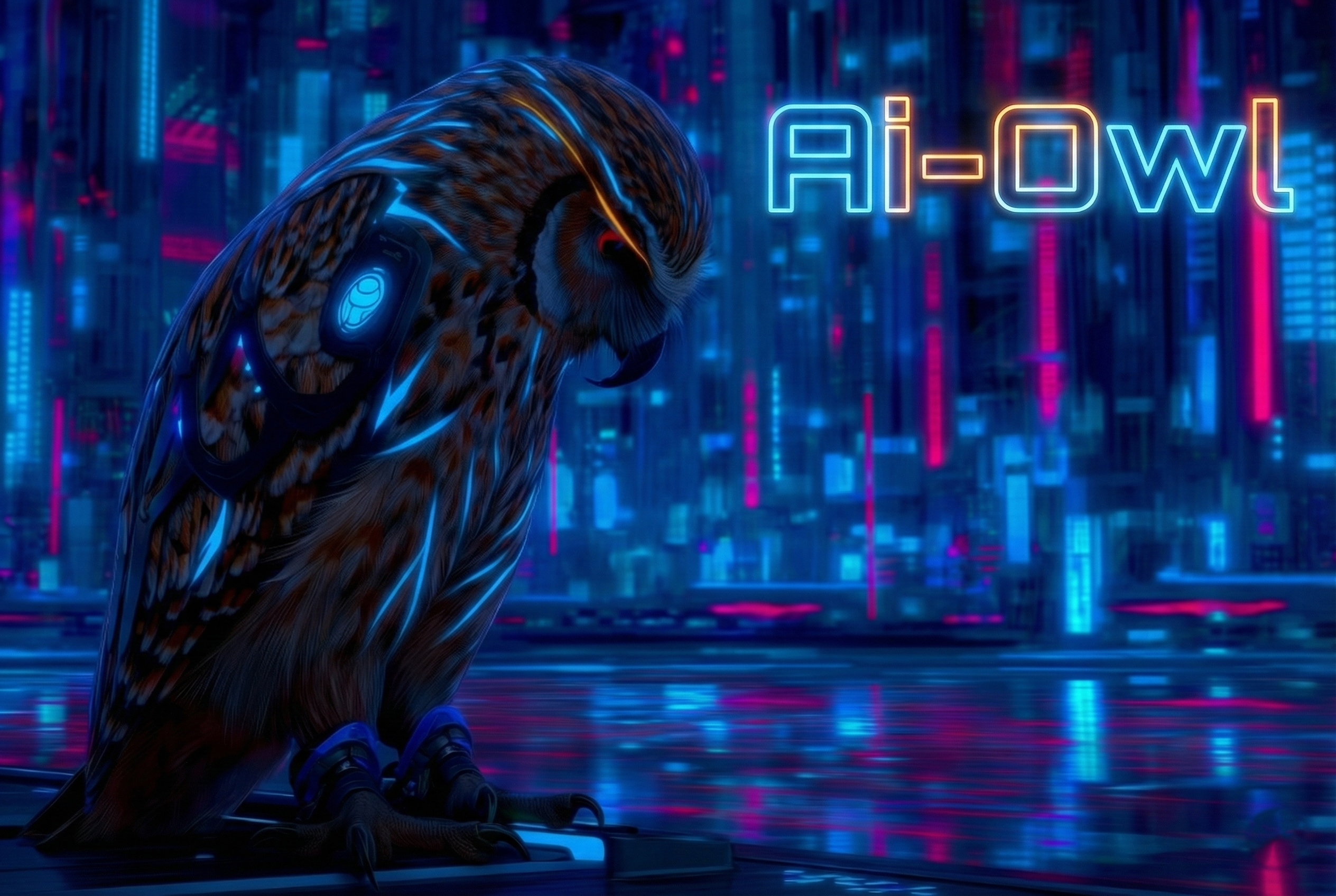
4.2 Monetization: Pro Tiers and Owl Tokens 🦉💵
As of 2024-2025, Randonautica has adopted a freemium model.
- Owl Tokens: The app operates on a currency system 🪙. Generating a standard quantum point costs tokens. Users receive a daily “allowance” of tokens, but heavy users must purchase packs (e.g., Starter Pack 600 Tokens for ~$2.99).
- Pro Subscription: 💳
- Cost: Approximately $6.99/month or $59.99/year.
- Benefits: Unlimited point generation, removal of “Water Points” (preventing coordinates from landing in lakes/oceans 🌊), extended radius capabilities, and advanced map themes.
4.3 Advanced Tools: The Sigilizer and Coin Flip 🔮🪙
To deepen the “magical” aspect of the experience, the app introduced specific tools in the “Games” or “Tools” drawer.
4.3.1 The Sigilizer ✍️✨
This feature leans into the intersection of Chaos Magick and technology.
- Function: It allows users to create a “Sigil”—a visual symbol representing their intention 🧿. The user might type an intention, and the app generates a unique glyph or symbol.
- Theory: In Chaos Magick, creating a sigil allows the user to focus their subconscious will on a specific desire. By integrating this into the app, Randonautica provides a digital ritual to focus the MMI before the quantum generation begins.
4.3.2 Random Advice and Coin Flip 🪙💬
These tools provide binary or textual randomness for decision-making.
- Usage: A user undecided on a course of action can use the “Coin Flip” (entropy-driven) or ask for “Random Advice” to receive a randomly selected phrase 🗣️. This reinforces the philosophy of surrendering agency to the external entropy of the universe.
4.4 Technical Updates (2025) 🔧📅
Recent updates indicate a robust maintenance schedule.
- Version 3.2.2 (Dec 2025): Simplified UX and bug fixes 🐛🚫.
- Discover Feed: A social feed within the app where users can share their reports publicly, creating a localized social network of Randonauts 🌍🤝.
- Rebuild in Flutter: The app was completely rebuilt in Flutter (v 3.0.9) to ensure cross-platform consistency and smoother animations 📲✨.
Part V: The Psychology of Randomness 🧠🎭
While the quantum mechanics provide the how, psychology explains the why. The user experience of Randonautica is a masterclass in cognitive bias and pattern recognition.
5.1 Apophenia and Pareidolia 👁️🧩
The engine of the Randonaut experience is Apophenia: the universal human tendency to perceive meaningful patterns within random data.
- Mechanism: When a user sets an intention (e.g., “Yellow” 🟡), their brain begins to scan the environment for that specific stimulus. This is the Baader-Meinhof Phenomenon (Frequency Illusion). If they see a yellow car at the coordinates, apophenia bridges the gap, interpreting the random presence of the car as a meaningful “response” from the universe 🌌🚙.
- Pareidolia: This is a sub-type of apophenia involving visual stimuli 👀. Randonauts often report seeing faces in tree bark 🌳, figures in shadows, or symbols in graffiti. The app’s “intention” mechanic primes the brain to project these images onto the noise of the environment.
5.2 The “Despair Meme” 😰🛑
A unique concept developed by the Fatum Project is the “Despair Meme”.
- Definition: This isn’t an internet meme, but a memetic reaction. It refers to the feelings of dread, nausea, anxiety, or sudden exhaustion that users report when attempting to visit a Blind Spot or Anomaly 😫.
- Theory: The Fatum Project theorists argue that the human brain is an uncertainty-reduction machine 🧠📉. It’s evolved to predict the future based on the past. True randomness represents a failure of prediction. When a user commits to following a random coordinate, they’re stripping their brain of its predictive power. The “Despair Meme” is the brain’s defense mechanism—a somatic signal urging the user to return to the safety of the deterministic routine (the reality tunnel) 🛡️.
- Manifestation: Users often report sudden arguments with friends, car trouble 🚗💥, or an overwhelming urge to turn back just before reaching a high-power anomaly.
5.3 Confirmation Bias and Priming ✅🎯
Confirmation Bias ensures that “hits” are remembered and “misses” are forgotten 🧠🗑️. If a user visits ten locations and finds nothing at nine of them, but finds an “Owl” 🦉 at the tenth, they’ll likely post about the tenth trip and claim the app “works,” ignoring the 90% failure rate.
Priming occurs when the intention is set. By articulating “Death” 💀 or “Mystery” 🕵️♀️, the user primes their Reticular Activating System (RAS) to filter sensory input for danger or ambiguity. A rustling bush becomes a stalker; a pile of trash becomes a crime scene 🚓. The user constructs the narrative before they even arrive at the coordinates 📖.
Part VI: User Narratives and Case Studies 📖📂
The mythology of Randonautica is built on user stories. These range from the miraculous to the macabre, each serving to reinforce the app’s mystique 👻✨.
6.1 The Dark Side: The Seattle Suitcase 🧳🌑
The most pivotal moment in Randonautica’s history is the “Seattle Suitcase” incident.
- The Event: On June 19, 2020, a group of teenagers used the app in Seattle 🌧️. Their intention was reportedly “travel” or vaguely adventurous 🌍. The app led them to Duwamish Head, a rocky stretch of shoreline 🌊.
- The Discovery: They found a black suitcase resting on the rocks near the water. In a video posted to TikTok (@UghHenry), they’re seen joking nervously as they approach it. They used sticks to pry it open, releasing an overpowering stench 🤢. They called the police and waited 👮♂️.
- The Outcome: The Seattle Police Department later confirmed the suitcase contained the dismembered remains of Jessica Lewis and Austin Wenner. The discovery aided in the homicide investigation against Michael Dudley ⚖️.
- Cultural Impact: This story went viral globally 🌍📺. It confirmed the “Despair Meme” for many—the idea that the app could lead to darkness. It shifted the app’s reputation from a fun exploration tool to a digital Ouija board, attracting thrill-seekers looking for “cursed” locations 👻.
6.2 The “Creepy” Feedback Loop 👻🔁
Following the Seattle incident, a trend of “scary randonauting” emerged. Users deliberately set intentions like “Death,” “Murder,” or “Evil.” 👿
- Narrative: One Reddit user recounted setting an intention for “something scary” and being led to a “sketchy abandoned road.” 🏚️ Upon returning home, they tried again, and the app pointed them back to the exact same road 🗺️🔙.
- Observations: Users reported being watched by “men in vans,” 🚐 finding piles of bones (often animal) 🦴, or encountering aggressive locals. These stories often reflect the Observer Effect—if you go looking for trouble in random, unlit places, you’re statistically likely to find it 🔭.
6.3 The Miraculous: Lost Rings and Healing 💍🩹
Conversely, there’s a genre of “wholesome” Randonaut stories centered on healing and recovery ❤️.
- The Lost Ring: A Reddit user reported recovering a ring lost in 1996 💍. After setting an intention related to the lost item, they didn’t find it at the coordinate, but the act of shifting their mindset (breaking the “missing ring” vibration) led to them finding it later in a garden shed drawer 🏡. While not a direct coordinate hit, the user attributed the discovery to the shift in reality tunnels caused by the app.
- Adopting “Randi”: Another user, intending to find “something scary,” found an emaciated, dying dog at the coordinates 🐕. They rescued the dog, named her “Randi” (after the app), and nursed her back to health 🩺. The “scary” intent manifested as a creature in a scary condition, but the outcome was an act of compassion 💗.
6.4 The Spiritual: Signs from the Universe 🌌✨
Users often use the app for divination.
- The “Love” Intention: A user intending to find “Love” was led to a flower bed of roses 🌹. Another intending “Spirituality” was led to a “Glory Supermarket,” where a stranger handed them a flyer for a nearby church ⛪.
- Interpretation: These stories highlight the app’s role as a psychogeographical mirror 🪞. The coordinates provide the canvas, and the user paints the meaning 🎨.
Part VII: Safety, Ethics, and Law 🛡️⚖️🚔
The intersection of digital instructions and physical movement creates significant legal and safety liabilities ⚠️.
7.1 Trespassing and Property Rights 🚫🏡
The QRNG doesn’t recognize property lines 🚧. A major criticism of Randonautica is its tendency to generate coordinates in private backyards, fenced industrial zones, or restricted government land 🏭.
- Legal Risk: Users following the dot blindly may commit Criminal Trespass. In the US, property owners may react aggressively 🔫. The app’s Terms of Service explicitly state that users must not trespass, but the gamified “arrow” interface encourages users to get as close as possible 🎯.
- Police Involvement: There are reports of police stopping Randonauts who are loitering near private property or acting suspiciously in remote areas 🚓.
7.2 Human Trafficking Myths vs. Reality 🚷🗣️
A persistent conspiracy theory claims Randonautica is a tool for human traffickers.
- The Myth: Traffickers wait at the coordinates to kidnap users 🚐.
- The Reality: This is technically debunked ❌. The coordinates are generated randomly and uniquely for each user session. Unless the app’s servers were compromised to target specific users in real-time (which has no evidence), a third party can’t know where the app will send a user. The “Danger” comes from the randomness itself—sending a user to a dangerous neighborhood or a desolate area where a predator might coincidentally be 🐺.
7.3 Data Privacy 🔒📱
As with any location-based app, privacy is a concern.
- Data Collection: The app collects user location data to generate the radius 🛰️. The developers claim data is anonymized, but the potential for tracking movement patterns exists.
- Permissions: The app requires precise GPS permissions 📍. In 2025, the app updated its privacy policies to be compliant with Apple and Google’s stricter standards, but users should be aware they’re broadcasting their location to the server 📡.
Part VIII: Comparative Analysis 📊🤔
Randonautica is often compared to other location-based experiences, but its “engine” sets it apart ⚙️.
8.1 Comparison Table: The Psychogeography Landscape 🗺️
| Feature | Randonautica 🦉 | Geocaching 📦 | Pokémon Go 👾 | Dérive App 🚶♂️ |
| Core Mechanic | Quantum Randomness (QRNG) 🎲 | GPS Coordinates of hidden containers 📍 | Augmented Reality (AR) collection 📱 | Task-based instructions (Drifting) 🗨️ |
| Goal | Synchronicity / Novelty ✨ | Treasure Hunting / Logbook signing ✍️ | Collection / Battling ⚔️ | Urban exploration / Breaking routine 🏙️ |
| Content | User-Projected (Internal Meaning) 🧠 | Community-Created (Physical Objects) 🧸 | Developer-Created (Virtual Assets) 💾 | User-Interpreted (Urban Environment) 👁️ |
| Reward | Emotional/Spiritual Insight 💡 | Physical Find / Community Stats 🏆 | Digital Collection / XP 🆙 | New perspective on the city 🌆 |
| Philosophy | Determinism vs. Free Will 🌌 | Community & Stewardship 🤝 | Nostalgia & Exertion 🏃♂️ | Situationist International 🇫🇷 |
| Cost | Freemium (Sub for features) 💵 | Freemium (Premium for advanced caches) 💳 | Freemium (Microtransactions) 💰 | Free / Low Cost 🆓 |
8.2 Randonautica vs. Geocaching 📦🆚🦉
Geocaching offers a tangible reward—a physical box hidden by another human. It’s a social contract between hider and seeker 🤝. Randonautica offers an abstract reward—a location chosen by a machine 🤖. Geocaching is “safer” as caches are usually placed in accessible locations; Randonautica is “wilder” 🌿.
8.3 Randonautica vs. Copycats (Universum, etc.) 🐈⬛
Following Randonautica’s success, apps like Universum, Randonauting Adventure, and Necronautica appeared 📱.
- Difference: Most copycats lack the connection to the ANU QRNG, using simple pseudo-random algorithms. They mimic the interface but lack the “metaphysical” backing of the Fatum Project theories 📚. Users often find them “boring” or “less magical” because the lore is missing ✨.
Part IX: Cultural and Philosophical Implications 🌍💭
9.1 Simulation Theory and “Glitches” 💻👾
Randonautica feeds directly into the zeitgeist of Simulation Theory—the idea that reality is a computer code. If reality is code, it has rules (algorithms). Randonauting is viewed as a “hack” or an exploit 🔓. By using true randomness, users believe they’re confusing the rendering engine of the simulation, leading to “glitches” like seeing the same person twice, finding out-of-place objects, or experiencing déjà vu 😵💫.
9.2 Chaos Magick and The Cyber-Sigil 🧙♂️💾
The app is a prime example of Technomancy or Cyber-Magick.
- Sigils: In Chaos Magick, a sigil is a symbol of intent 🧿. Randonautica digitizes this. The “Intention” input is the sigil; the “Coordinate” is the manifestation.
- The Ritual: The walk or drive to the point is the ritual enactment 🚶♂️. The app democratizes magic, stripping it of occult aesthetics and wrapping it in the UI of a tech startup 📱🏢.
9.3 The Future of Algorithmic Drift 🤖📉
Randonautica represents a resistance to “Algorithmic Control.” In an era where Google Maps directs traffic 🚦, Spotify directs listening 🎧, and TikTok directs attention 🤳, Randonautica directs nothing. It offers pure noise 🔊. As AI becomes more predictive in 2025 and beyond, tools that offer “true randomness” may become essential for maintaining a sense of human agency and free will 🕊️.
Conclusion 🏁🌟
Randonautica is more than an app; it’s a collaborative storytelling engine fueled by quantum physics and human hope ⚛️🤝. Whether one views it as a scientific breakthrough in Mind-Matter Interaction or a psychological playground of confirmation bias, its impact is undeniable 💥. It forces users to look up from their screens and engage with the physical world, finding magic in alleyways, trash piles, and empty fields 🌿🏙️.
By turning the user into the protagonist of a “Choose Your Own Adventure” written by the universe, Randonautica exposes a profound truth: the world is only as interesting as the attention we pay to it 🧐. In the search for “Attractors” and “Anomalies,” Randonauts are ultimately searching for a way to rewrite their own narratives, one random coordinate at a time 📍🖊️.
Recommendations for the Curious 🧐✅
- Start Small: Use a small radius (1-2km) and travel by foot 🚶♂️.
- Be Specific: Vague intentions yield vague results. Specific intentions (e.g., “Purple Dinosaur” 💜🦕) yield clearer hits (or clearer misses).
- Respect the “Despair Meme”: If you feel an overwhelming urge to stop, listen to your gut 🤢🚫. Safety supersedes the algorithm.
- Document Everything: The magic of Randonauting fades if not recorded. Use the in-app journal to track your synchronicities 📓✨.

Leave a Reply