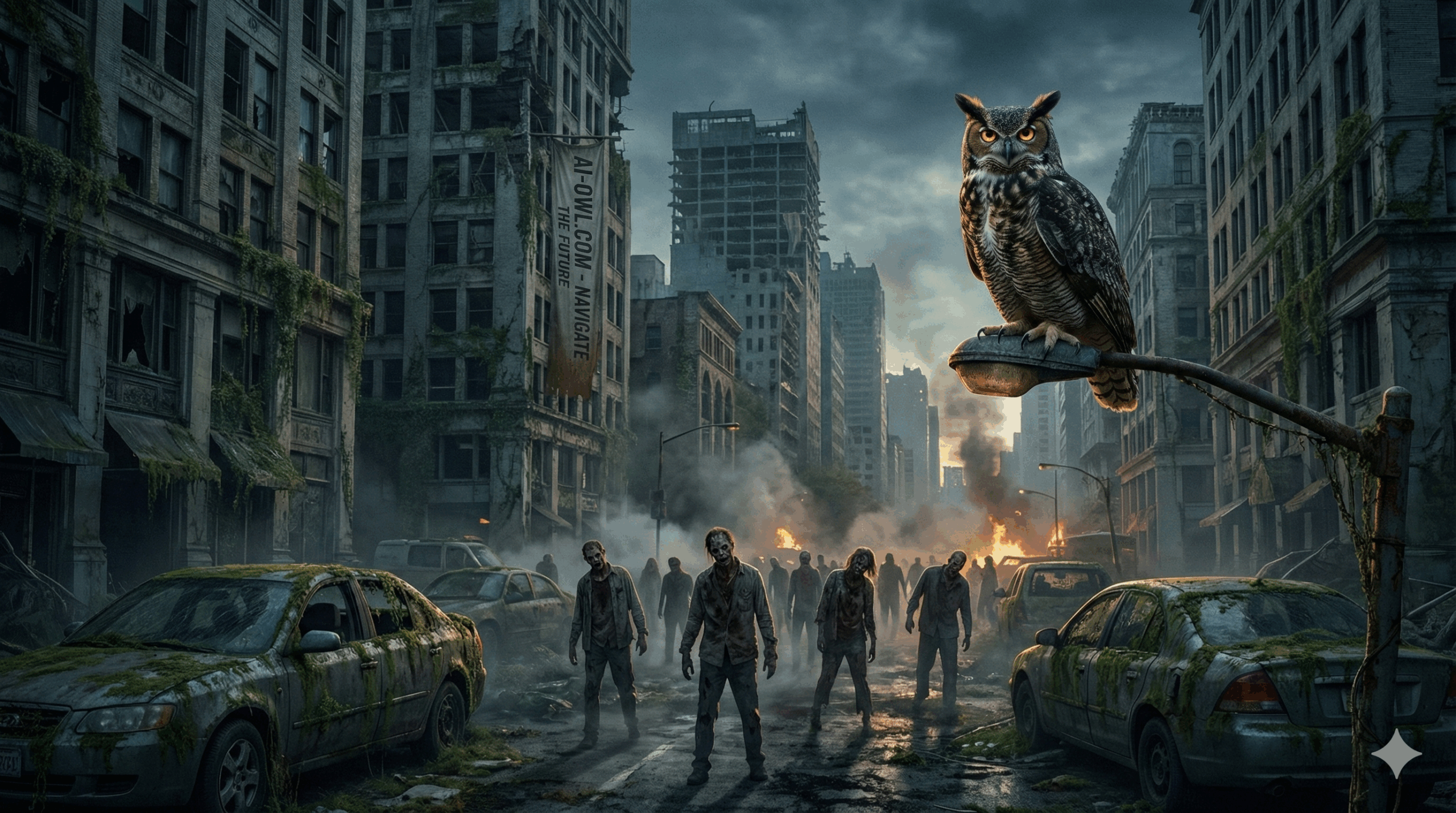
🚨 SPOILER ALERT 🚨
Hold up! ✋ This post contains major plot details, secrets, and ending spoilers for the subject material of Resident Evil. 🤫💥
If you haven’t finished watching, reading, or playing yet, turn back now! 🏃💨
Proceed at your own risk… 🫣👀📉
5 Key Takeaways: Resident Evil 🧬🧟
1. Survival via Mutation 🔄 The franchise endures by constantly reinventing its gameplay. It evolved from fixed-camera isolation to action-heavy shooters, and finally to first-person psychological horror, consuming other genres to stay relevant.
2. Science, Not Magic 🧪 Unlike supernatural horror, every monster is grounded in virology or parasitology. The threat isn’t ghosts; it’s Progenitor Viruses, Las Plagas parasites, and The Mold functioning as biological weapons.
3. The Villain is Capitalism 👔 The series is a satire of the military-industrial complex. The true antagonists are pharmaceutical conglomerates like Umbrella and Tricell that treat bio-organic weapons (B.O.W.s) as consumer products.
4. Heroes Defined by Trauma 💔 The recurring cast (Chris, Jill, Leon) aren’t superheroes; they are broken veterans. Their relationships, like Leon and Ada’s, are defined by professional distance and shared PTSD rather than traditional romance.
5. The Future is Open World 🔮 Leaks for Resident Evil 9 (2026) suggest a shift to an open-world structure. Meanwhile, the success of recent remakes points to modernized versions of Code: Veronica and Zero arriving soon.
1. The Biohazard Phenomenon: A Transmedia Genesis 🧬🌏
The Resident Evil franchise, known domestically in Japan as Biohazard, stands not merely as a seminal series of video games but as a sprawling transmedia universe that’s fundamentally altered the landscape of horror fiction, interactive media, and global pop culture. 🎬🌎 Since its inception in 1996 by Capcom luminaries Shinji Mikami and Tokuro Fujiwara, the franchise has expanded from a singular, claustrophobic incident in the Arklay Mountains 🏔️ into a global geopolitical saga detailing the collapse of societies under the weight of unchecked corporate transhumanism and biological warfare. 💥🧪
The longevity of Resident Evil is rooted in its protean nature; it’s a franchise that survives by mutating. 🦠 It’s continuously reinvented its mechanical and narrative identity while maintaining a core philosophical tension: the fragility of the human form against the hubris of scientific advancement. 👨🔬🧬 What began as a digital tribute to George A. Romero’s zombie cinema 🎥 and the psychological isolation of Alone in the Dark has evolved into a multimedia empire comprising over 170 million units sold, live-action blockbusters, canonized CGI films, stage plays, manga, and literature. 📚💰 It’s a universe where the stock market fluctuates based on bio-terror attacks 📉, where architectural design is weaponized against the inhabitant 🏰, and where the definition of humanity is constantly besieged by viral rewriting. 🩸🖊️
1.1 The Morphologies of Fear: Eras of Gameplay Evolution 🎮👻
To understand the Resident Evil universe, one must analyze the distinct eras of its mechanical evolution, as the method of interaction fundamentally shapes the narrative themes. The franchise’s history can be morphologically categorized into distinct epochs, each reflecting the technological anxieties and gaming trends of its time. 🕹️📉
| Era | Timeline | Key Titles | Gameplay Paradigm | Thematic Focus |
| The Golden Age (Survival Horror) 🔦 | 1996–2004 | RE1, RE2, RE3, Code: Veronica, Zero, REmake | Fixed Camera, Tank Controls | Isolation, Resource Scarcity, Voyeurism, Gothic Horror |
| The Action Revolution (Global Terror) 🔫 | 2005–2016 | RE4, RE5, RE6, Revelations 1 & 2 | Over-the-Shoulder (OTS), High Mobility | Bioterrorism, Crowd Control, Global Warfare, Cooperative Action |
| The Renaissance (Psychological & Body Horror) 🧠 | 2017–Present | RE7, Village, RE2/3/4 Remakes | First-Person (FPS) & Hybrid OTS | Domestic Horror, Claustrophobia, Body Horror, Trauma |
The transition from the fixed camera angles of the late 1990s—which created a sense of cinematic voyeurism and disempowerment by hiding threats just off-screen—to the over-the-shoulder (OTS) perspective pioneered in Resident Evil 4 marked a pivotal shift in gaming history. 🎥➡️🔫 This shift wasn’t merely aesthetic but functional; it popularized the camera style that would define the third-person shooter genre for decades, influencing titles like Gears of War. ⚙️ However, this shift also altered the “horror” dynamic. As protagonists became more capable combatants (Leon Kennedy’s suplexes 🤼, Chris Redfield’s boulder-punching 🪨👊), the horror shifted from the fear of the unknown to the pressure of overwhelming crowds and tactical resource management. 🧟♂️🧟♀️
The subsequent pivot to the First-Person Perspective (FPS) in Resident Evil 7: Biohazard represented a return to disempowerment. 👀🖐️ By restricting the player’s peripheral vision and removing the dissociation of a third-person camera, Capcom forced a direct confrontation with the “abject”—the grotesque fluids and rotting matter of the Baker estate. 🏚️🤮 This cyclical evolution demonstrates the franchise’s unique ability to consume other sub-genres, digest them, and re-emerge as something recognizable yet distinct. 🔄🦋
2. Biological Ontology: The Virology of the Damned 🔬🧟
At the heart of the Resident Evil universe lies a complex, scientifically grounded biological taxonomy. Unlike supernatural horror franchises like Silent Hill, which rely on psychological manifestation and metaphysical punishment, Resident Evil creates a universe where “magic” is explicitly rejected in favor of virology, parasitology, and mycology. 🚫🧙♂️🧪 The monsters aren’t demons; they’re products—pharmaceutical assets that function exactly as intended, or tragically fail in their weaponization. 🏭🧟♂️
2.1 The Progenitor Hierarchy 🧬👑
The “family tree” of Resident Evil’s biological agents traces back to a single source, diverging into various strains designed for specific military or evolutionary applications. 🌳🩸
- The Progenitor Virus: The ancient “Mother” virus discovered in the subterranean ruins of the Ndipaya kingdom in West Africa, within the “Stairway to the Sun” flower (Sonnentreppe). 🌼💀 It’s an RNA retrovirus capable of rewriting DNA, serving as the foundational clay for all subsequent B.O.W.s (Bio-Organic Weapons). The Ndipaya consumed it in rituals to choose their kings, as survival granted superhuman abilities, though the mortality rate was catastrophic. 📉👑
- Tyrant Virus (t-Virus): Engineered by James Marcus by combining the Progenitor virus with leech DNA to boost its transmissibility. 🦠🐌 Its primary function wasn’t to create zombies, but to create “Tyrants”—durable, obedient biological weapons. 💪🧟♂️ Zombies are merely the “waste product,” the result of the virus causing metabolic failure and necrosis in incompatible hosts (the general population). 🧟🧠
- Golrothea Virus (G-Virus): William Birkin’s magnum opus, distinct for its aggressive, volatile mutation capabilities. 👁️🧬 Unlike the t-Virus, which causes necrosis (rot), the G-Virus induces constant, rampant cellular reproduction and evolution. It attempts to create a new organism that exists to propagate; it resurrects the dead not as rotting corpses but as constantly evolving entities. It’s sexually transmissible via embryo implantation, though genetic compatibility (like that between William and Sherry Birkin) is required for the embryo to gestate rather than burst from the host. 🥚💥
- T-Veronica Virus: Created by Alexia Ashford by fusing the Progenitor virus with the ancient DNA of a queen ant and plant genetic material. 🐜🌱 It focuses on the “hive mind” concept and preserving human intelligence while granting pyrokinetic abilities. 🔥🧠 However, it requires a fifteen-year cryogenic stasis to bond properly with the host’s immune system, a flaw that limited its mass weaponization. 🧊⏳
2.2 The Shift to Parasitology and Mycology 🍄🐛
The mid-2000s era of the franchise moved away from viruses toward organisms that allowed for coordinated intelligence. 🧠🔗
- Las Plagas: An ancient parasitic organism excavated from the mines of Spain. 🇪🇸⛏️ Distinct from viruses, Plagas are macro-parasites that assimilate the host’s central nervous system. They retain the host’s intelligence, skills (driving, using firearms), and social structures while enforcing absolute obedience to a “Control Plaga” holder (like Osmund Saddler). ⛪🧙♂️ This biological shift allowed for the “action-horror” gameplay, as enemies could coordinate flanking maneuvers and communicate. 🗣️⚔️
- Uroboros: Albert Wesker’s “Doomsday” virus, derived from the Progenitor but engineered to be less lethal and more selective. 🕶️🌍 It was designed to force artificial evolution on the entire human race, killing the weak and granting godhood to the genetically superior. Its visual marker is the writhing black pustules resembling leeches, symbolizing the consumption of the self. 🌑🐍
- The Mold (Mutamycete): A fungal super-organism discovered in Eastern Europe, capable of storing consciousness in a biological network (the Megamycete). 🍄🧠 This represents the franchise’s shift from individual mutation to collective assimilation. The Mold allows for phenomena that appear supernatural—hallucinations, telepathy, “ghosts”—to be explained through chemical signaling and neural interfacing via fungal spores. It connects all infected hosts into a singular consciousness, a “family” mind. 👨👩👧👦👻
2.3 Comparative Pathogen Analysis 📊🧪
The effectiveness of these agents is often debated in the context of military application versus apocalyptic potential. 💥🌍
| Agent | Vector | Cognitive Retention | Mutation Rate | Necrosis/Decay | Weaponization Utility |
| t-Virus 🧟 | Injection, Bites, Water | None (Zombification) | Low (Stable Tyrants) | Severe | High (Terror/Chaos) |
| G-Virus 👁️ | Injection, Impregnation | Degrades to Instinct | Extreme (Unstable) | Minimal (Regenerative) | Low (Uncontrollable) |
| Las Plagas 🐛 | Oral Injection (Egg) | High (Hive Mind) | Variable (Host Dependent) | None | Extreme (Soldier Replacement) |
| Uroboros 🌑 | Missiles, Direct Contact | None (Unless Compatible) | Instant (Consumes Host) | Total | Global (Evolutionary Filter) |
| C-Virus 🦋 | Injection, Gas | Variable (J’avo retain intellect) | High (Chrysalid Phase) | Variable | High (Versatility) |
| The Mold 🍄 | Spores, Contact | Preserved in Network | Controlled (Regenerative) | None | Specialized (Infiltration) |
A frequent point of comparison in modern horror analysis is between Resident Evil’s Las Plagas/Mold and the Cordyceps from The Last of Us. 🍄🆚🍄 While both involve biological takeovers, the thematic divergence is stark. The Last of Us presents Cordyceps as an uncaring force of nature, a disaster that destroys civilization. Resident Evil presents its pathogens as products—manufactured, patented, and sold. 💰🧪 The horror in Resident Evil is transactional; the Mold doesn’t just kill, it creates a twisted “family” unit, weaponizing the domestic sphere. 🏠🔪 Las Plagas weaponizes community and religious devotion, turning a village’s insularity into a fortress. 🏰🙏
3. Geopolitics and Corporate Hegemony 🌍💼
The Resident Evil universe operates as a satirical mirror of late-stage capitalism and the military-industrial complex. 👔🏭 The narrative isn’t driven by chaotic evil, but by corporate balance sheets, stock market fluctuations following bio-terror incidents, and the commodification of evolution. 💹🧬
3.1 The Corporate Pantheon: From Pharmaceuticals to PMCs 🏢💊
- Umbrella Corporation: The primary antagonist for the first decade of the franchise. ☔🔴⚪ Initially a pharmaceutical conglomerate, Umbrella represents the “banality of evil.” Their public face as a producer of consumer goods—cosmetics, foods, medicines—masks their eugenics-based goal of forcing human evolution. 🧴🧬 Their motto, “Obedience Breeds Discipline, Discipline Breeds Unity,” reflects a fascist corporate culture. Their collapse in 2003, following the Raccoon City Trials and the stock market crash induced by their liability, didn’t end the threat; it merely deregulated the market, allowing their research to flood the black market. 💸🏴☠️
- The Consortium (The Family): A fraternity of global elites, dating back to the founding of the United States, who manipulate geopolitics to maintain American hegemony. 🇺🇸🕵️♂️ Derek Simmons, the National Security Advisor and head of The Family, utilized bio-terror attacks (such as the assassination of the President in RE6) not for evolution, but to destabilize geopolitical rivals and maintain the global status quo. This faction represents the deep state’s willingness to use monsters as political tools. 👹♟️
- The Connections: A crime syndicate operating in the shadows of the post-Umbrella world. 🌑🕸️ Unlike Umbrella’s desire for a superior race, The Connections focus purely on the economics of crime: money laundering, arms trafficking, and the development of the Mold (E-Series assets) for assassination rather than warfare. They represent the modern, decentralized nature of criminal organizations. 💰🔫
- Tricell: A conglomerate with roots in the age of exploration (shipping and natural resources), which eventually bought into the pharmaceutical market. 🚢🧪 They partnered with Wesker to develop Uroboros, representing the danger of “legacy” corporations pivoting to bio-weapons to maintain market relevance. 🤝☣️
- Blue Umbrella: A Private Military Company (PMC) formed from the assets of the defunct Umbrella Corporation, ostensibly to clean up B.O.W. incidents. 🔵☔ Their existence highlights the ethical gray zone of privatized military contractors, as they utilize former Umbrella data to fight the very monsters that data created. This moral ambiguity creates friction with long-time heroes like Chris Redfield, who distrusts their corporate rehabilitation. 🤨🛡️
3.2 The Economics of Terror 💸💣
The dissolution of Umbrella effectively democratized the B.O.W. market. 📉🔓 In Resident Evil 5 and Damnation, we witness bio-organic weapons used in civil wars in fictional nations like the “Kijuju Autonomous Zone” and the “Eastern Slav Republic.” The cost of a Licker or a Hunter becomes a line item in a warlord’s budget, cheaper than a tank and psychologically more devastating. 🦁🤑
The lore explicitly details the economic impact of bio-terror. The “Terragrigia Panic” (depicted in Revelations) and the destruction of Raccoon City caused massive fluctuations in pharmaceutical stocks. 📉🌇 This volatility led to the rise of the Federation of Pharmaceutical Companies, which funded the founding of the BSAA (Bioterrorism Security Assessment Alliance) not purely out of altruism, but to protect their investments by stabilizing the global market and restoring public trust in pharmaceutical products. 🛡️💊 Thus, the heroes of the BSAA are, ironically, funded by the very industry that created their enemies. 🤷♂️💰
3.3 Fictional Geography and Political Evasion 🗺️🚫
To narrate global collapse without inciting real-world diplomatic incidents, Resident Evil utilizes a tapestry of fictional nations that serve as thinly veiled allegories.
- Edonia: A fictional Eastern European nation (likely a stand-in for Serbia or Ukraine during conflict periods) torn apart by civil war and the C-Virus. ❄️🔫
- Lanshiang: A massive Chinese metropolis representing the density of Hong Kong or Shanghai, used to showcase the catastrophic scale of a C-Virus outbreak in a high-population zone. 🇨🇳🏙️
- Terragrigia: A sleek, solar-powered artificial island city in the Mediterranean, symbolizing the futility of eco-utopias in the face of bio-terrorism. ☀️🏝️ Its destruction via the “Regia Solis” satellite laser mirrors the Raccoon City nuclear strike—a scorched earth policy. 🛰️💥
- Penamstan: A fictional Middle Eastern country appearing in Infinite Darkness, serving as the backdrop for a civil war fueled by zombie outbreaks, mirroring US interventionism in the region. 🏜️🧟♂️
4. The Human Element: Psychology, Sociology, and Trauma 🧠❤️
While monsters roam the streets, the human element remains the emotional anchor of the franchise. The recurring cast has grown from rookie survivors to hardened, potentially traumatized veterans, their psyches scarred by decades of unending war. 🤕🛡️
4.1 Character Morphologies and Relationships 👥💔
The relationship dynamics in Resident Evil often subvert traditional romantic tropes in favor of “trauma bonding” and professional distance. 🤝🛑
- Leon S. Kennedy & Ada Wong: Often compared to a “Batman and Catwoman” dynamic, deep analysis suggests a tragic bond dictated by geopolitical allegiance. 🦇🐱 Their relationship is stuck in perpetual limbo because acknowledging their feelings would require one to defect, dismantling their core identities. Ada acts as Leon’s shadow, protecting him from the darkness she inhabits, while Leon represents the idealism she can’t afford. 🕶️✨ Their interactions in RE2, RE4, and RE6 show a progression from naive infatuation to a weary, unspoken understanding that they can never truly be together. 💔🍸
- Chris Redfield: The archetype of the stoic soldier, Chris’s arc represents the toll of the “long war.” 🏋️♂️🔫 In RE1, he’s an optimist; by RE6, he suffers from PTSD and substance abuse; and by Village, he’s weary, cynical, and willing to operate outside the law (Blue Umbrella), showcasing the erosion of institutional trust. He’s become the “Boulder Puncher”—a man who believes sheer force of will can move immovable objects, yet he constantly loses his teammates (Piers Nivans, Jill Valentine temporarily). 🧱💪
- Jill Valentine: The master of unlocking and the “First Lady” of survival horror. 🔓👑 Her evolution from a S.T.A.R.S. officer to a manipulated puppet of Wesker (in RE5) adds a layer of violation to her narrative. Her psyche is defined by resilience and the struggle to reclaim her autonomy after being mind-controlled. 🧠🕷️
- Ethan Winters: A subversion of the action hero. Ethan is an “everyman” whose primary motivation is the domestic sphere (saving his wife/daughter), contrasting with Chris/Leon’s mission to save the “world.” 🏠👨👩👧 His fungal biology in RE7 and Village raises profound ontological questions about identity—is he a man, or a Mold simulation of a man who loves his family? His sacrifice redefines the franchise’s heroism from military duty to parental love. 🍄❤️
- The Redfield Lineage: A popular meme within the community involves Chris desperately trying to get Leon to marry his sister Claire to continue the Redfield bloodline. 💍🤣 While purely fan-fiction, it highlights the community’s investment in the characters’ legacies and the stark lack of “normal” lives available to these bio-warriors. 🧬👶
4.2 Civilian Life and Daily Routines 🍔🥪
The tragedy of Resident Evil is best observed in the minutiae of daily life before the outbreaks. The Outbreak games and file logs reveal a world of mundane problems interrupted by horror. 📰🧟
- Dietary Habits: In Raccoon City, citizens consumed “Raccoon Milk” and “Flakey Bakery Bread.” 🥛🍞 Jill Valentine’s apartment fridge is stocked with beer and processed foods, indicating a work-focused, bachelor lifestyle. 🍺🍕 Conversely, the Baker family dinner in RE7, consisting of human entrails served as a Southern feast, grotesquely parodies the concept of “family dinner,” twisting comfort food into body horror. 🍗🤢 Specific culinary references like “Chris’s Boulders” (meatballs) and “Leon’s Fortune Cookies” have even appeared in real-world promotional cafes, blurring the line between the game world and reality. 🥠🍽️
- Pop Culture: The universe has its own bands and movies. Biohazard 4D-Executer and movie posters in RE3 (like “Skull Stalker”) show a culture obsessed with sci-fi and horror, ironically mirroring the events that eventually consume them. 🎸🎬 Characters listen to real-world bands; Claire Redfield is noted to likely listen to Queen (referencing her jackets “Made in Heaven” and “Let Me Live”), while Leon is jokingly associated with boy bands due to his hairstyle. 🎶🎤
- Brand Loyalty: In-universe brands like “Kendo Gun Shop” and “Atmos Airlines” appear across multiple titles, creating a cohesive consumer reality. 🔫✈️ The ubiquitous “Umbrella” logo on everyday medical supplies before the outbreak serves as a commentary on corporate ubiquity. 🏥☔
5. Aesthetics and World Building: The Architecture of Fear 🏰😨
Resident Evil employs architecture not just as a setting, but as a narrative device. The environments are never utilitarian; they’re labyrinthine puzzles designed to entrap, reflecting the twisted minds of their owners. 🧩🏠
5.1 The Spencer Mansion & Gothic Revival 🏰🖼️
The Spencer Mansion (RE1) is the antithesis of functional design. Built by George Trevor (who was subsequently murdered by Spencer to keep its secrets), it creates “spatial horror”—the fear of what lies around the corner. 😱📐 The mansion is a “Hauntological” space, a relic of an aristocratic past that refuses to die, physically manifesting the rot of the Spencer family. It’s designed to disorient, with traps hidden behind art and keys hidden in books, symbolizing Spencer’s belief that only the intellectually “worthy” deserve survival. 🗝️📚
5.2 Castle Dimitrescu & The Peles Inspiration 🧛♀️🏰
In Resident Evil Village, Castle Dimitrescu draws direct inspiration from Peles Castle in Sinaia, Romania. 🇷🇴 The Neo-Renaissance and Rococo styles signify excess and vanity. ✨💅 The beauty of the castle, with its gilded halls and fine art, acts as a veneer hiding the dungeon torture chambers (the cellar), reinforcing the theme that wealth and high culture are often built upon the suffering of the lower class (the villagers). 🥀⛓️ The use of expensive wines (Sanguis Virginis) made from human blood satirizes the consumption habits of the aristocracy. 🍷🩸
5.3 Rural Spain & The Los Illuminados 🏚️🍂
The village in Resident Evil 4 (and its remake) utilizes a drab, autumnal palette to evoke decay. 🍂🌫️ Geographically pin-pointed to Northern Spain (Cantabria or Galicia) due to the dialect and climate, the setting emphasizes isolationism and the rejection of modernity. 🚫📱 This isolation is crucial for the Los Illuminados cult, which views the Plagas not as infection, but as religious enlightenment. 🙏🐛 The setting contrasts the beautiful, ancient architecture of the Salazar castle with the filthy, industrial horror of the island labs, illustrating the corruption of tradition by industrial militarization. 🏭🏰
6. The Expanded Universe & Metagame 🌌🕹️
The Resident Evil experience extends far beyond the canonical narrative of the main games. It encompasses a “metagame” of community interaction, spin-off media, and competitive play. 🤝🏆
6.1 The Crossover Multiverse 🌍🤛
Capcom has aggressively integrated Resident Evil into the broader gaming ecosystem.
- Dead by Daylight: The inclusion of the Nemesis, Wesker, Leon, Jill, Ada, and Rebecca as playable characters codified Resident Evil as the “king” of survival horror within the asymmetrical horror genre. 👑🔪 The interactions here, while non-canon, reinforce the character archetypes (Wesker’s arrogance, Leon’s altruism). 🦸♂️🦹♂️
- Fortnite & PUBG: The appearance of Chris and Jill in Fortnite and PUBG signifies the franchise’s status as a lifestyle brand. Seeing Chris Redfield “floss” or skydive is a jarring but commercially potent example of the franchise’s flexibility. 💃🪂
- Teppen & Others: Card games and fighting games (Marvel vs. Capcom) allow for “dream matches,” such as Wesker fighting Marvel heroes, further cementing the power levels of these characters in the pop-culture consciousness. 🃏🥊
6.2 Stage Plays and Manga 🎭📖
Often overlooked by casual fans, the Japanese media fills critical lore gaps. 🗾🕵️♂️
- Biohazard: The Stage: A canon stage play set in an Australian university, featuring Chris Redfield and Piers Nivans. 🇦🇺🎭 It provides essential backstory for their partnership before the tragic events of RE6. 🤝
- Marhawa Desire: A manga series that details the C-Virus outbreak at the Marhawa Academy in Asia. 🏫🦠 It introduces Piers Nivans and sets the stage for the global pandemic in RE6. 🌏
- Heavenly Island: Another manga set on a torture island used for a TV show, featuring Claire Redfield and Parker Luciani, linking the events of Revelations 2 to RE7 via the recovery of B.O.W. data. 🏝️📺
6.3 The Speedrunning Community ⏱️🏃♂️
The Resident Evil speedrunning scene is legendary, particularly for RE2 Remake, RE3 Remake, and RE4. It’s driven technical innovations and discovered mechanics the developers never intended. 🛠️🧠
- The Door Skip: In the original games, door animations were loading screens. 🚪⏳ Speedrunners developed mods to remove these for the PC versions, fundamentally changing the pacing of the run. 💨
- Records: The world record for the original Resident Evil sits at an astonishing 38:04 (by runner Hamo), a feat of memorization and RNG manipulation. 🏆🎲
- Knife Only Runs: The community obsession with completing the games using only the knife has influenced developers to make the knife a viable, upgradeable weapon in the modern remakes (RE4 Remake’s parry system is a direct nod to high-level play). 🔪✨
6.4 Accessibility ♿🎮
The modern era has seen a focus on accessibility, though mixed results remain. While The Last of Us Part II set a high bar with motor accessibility (auto-navigation), Resident Evil 4 Remake was criticized for lacking similar motor presets, despite offering robust visual and auditory aids. 👂👁️ This remains a point of contention and growth for Capcom as they aim for a wider audience. 📈👥
7. Philosophical Undercurrents 🧘♂️🤔
7.1 Transhumanism and Hubris 🦾🤖
The core philosophy of Resident Evil is a critique of Transhumanism—the belief that humanity can evolve beyond its physical limitations through technology/biology. 🧬🚀 Wesker, Spencer, and Miranda all seek to transcend death. However, the game presents this not as evolution, but as devolution into monstrosity. 👹 The “perfect” beings (Tyrants, Uroboros Wesker) are grotesque, stripped of humanity. True strength in the series is always shown to be the human spirit and cooperation (Chris/Sheva, Claire/Moira), not biological enhancement. 🤝❤️
7.2 The Grotesque and Body Horror 🦴👁️
The series masters “Body Horror”—the destruction and reconfiguration of the human form. 🩸🦵 The transformation of William Birkin is a tragedy of the self; his eyes migrate, his humanity is subsumed by a giant eye on his shoulder. 👁️👕 This aligns with the philosophical concept of the “abject”—that which disturbs identity, system, and order. The RE2 Remake emphasizes this with the “wet” gore system, making the internal external, forcing the player to confront the fragility of the meat that makes up the human body. 🥩🤢
8. Complete Media Chronology (Canon & Notable) 📅🎞️
This timeline integrates games, canon CGI films, and key manga to provide a linear narrative flow of the universe’s history. ⏳📽️
The Origins (Pre-1998) 🕰️
- Resident Evil Zero (Game): The Ecliptic Express incident. 🚂 Rebecca Chambers and Billy Coen uncover the Queen Leech.
- Resident Evil / Remake (Game): The Mansion Incident. 🏰 The Alpha Team’s survival against the Tyrant.
The Fall of Raccoon City (1998) 🏙️🔥
- Resident Evil 2 / Remake (Game): Leon and Claire arrive in Raccoon City during the G-Virus outbreak. 🚔🧟
- Resident Evil 3 / Remake (Game): Jill’s escape and the Nemesis pursuit. 🏃♀️🧟♂️ Raccoon City is destroyed by a thermobaric missile. 🚀💥
- Resident Evil Outbreak File 1 & 2 (Game): Citizen perspectives of the outbreak (Cindy, Mark, Alyssa, etc.). 🧑🤝🧑🆘
The Post-Umbrella World (1998–2004) 🌍🚫☔
- Code: Veronica (Game): Claire searches for Chris on Rockfort Island; the return of Albert Wesker. 🏝️🕶️
- Resident Evil: The Darkside Chronicles (Game): “Operation Javier” in South America; details Leon and Krauser’s backstory. 🌴🔪
- Resident Evil: Dead Aim (Game): T-G Virus outbreak on the Spencer Rain cruise ship. 🚢☣️
The Plagas & Bioterror Era (2004–2011) 🐛🔫
- Resident Evil 4 / Remake (Game): Leon rescues Ashley Graham in Spain from Los Illuminados. 🇪🇸👸
- Resident Evil: Revelations (Game): The Queen Zenobia incident; the early days of the BSAA. 🛳️🛡️
- Resident Evil: Degeneration (CGI Movie): Harvardville Airport outbreak; Leon and Claire reunite. ✈️👫
- Resident Evil: Infinite Darkness (CGI Series): White House conspiracy involving Penamstan. 🏛️🔦
- Resident Evil 5 (Game): Chris and Sheva in Kijuju; the death of Albert Wesker. 🌍🕶️💀
- Resident Evil: Revelations 2 (Game): Claire and Moira Burton on Sushestvovanie Island; Alex Wesker’s consciousness transfer. 🏝️👯♀️
Global Chaos & The Mold (2012–Present) 🌏🍄
- Resident Evil: Marhawa Desire (Manga): C-Virus outbreak at a prestigious Asian academy. 🏫🦋
- Resident Evil: Damnation (CGI Movie): Leon in the Eastern Slav Republic civil war. 🎖️🧟
- Resident Evil 6 (Game): Global C-Virus attacks (USA, China, Edonia). 🇺🇸🇨🇳 The death of Piers Nivans. ⚡😥
- Resident Evil: Vendetta (CGI Movie): Glenn Arias and the A-Virus; Leon, Chris, and Rebecca team up. 🏍️🔫
- Resident Evil 7: Biohazard (Game): Ethan Winters in Dulvey, Louisiana (The Mold). 🏚️👨
- Resident Evil Village (Game): Ethan in Romania; the Megamycete and Mother Miranda. 🐺🧛♀️
- Resident Evil: Death Island (CGI Movie): The “Avengers-style” team-up at Alcatraz featuring Jill, Leon, Chris, Claire, and Rebecca. 🏝️🦸♂️🦸♀️
9. Cultural Impact and Lifestyle 🎭👗
9.1 Fashion and Style 🧥👞
Resident Evil characters have influenced gaming fashion. Leon Kennedy’s shearling bomber jacket (RE4) is an iconic piece of gaming apparel, widely replicated in real life by high-end manufacturers and cosplayers. 🧥❄️ The characters shift from military fatigues (Chris in RE1/5) to “tactical civilian” wear (Ada’s cocktail dresses tailored for combat 💃🔫, Leon’s casual suits in Infinite Darkness 🕴️), reflecting a world where bio-terror can strike anywhere, anytime. The “tactical turtleneck” worn by Leon is a staple of the genre. 🐢👕
9.2 Music and Atmosphere 🎵🔊
The soundscape ranges from the safe room’s soothing “Save Theme” (usually orchestral or piano) 🎹😌 to the industrial metal of the live-action soundtracks (Marilyn Manson, Rammstein). 🎸🤘 Resident Evil 7 utilized musique concrète, using recorded sounds of raw meat, vegetables, and bees to create visceral foley effects for the Molded, creating a soundscape that felt organically “wrong” to the human ear. 🐝🥩 Diegetic music also plays a role; the “Moonlight Sonata” in RE1 isn’t just a puzzle solution but a signifier of the Spencer family’s twisted refinement. 🎼🌔
9.3 Cosplay Trends 🦸♂️👗
The franchise is a pillar of the cosplay community. In 2025, trends show a resurgence of “classic” looks (Rebecca Chambers, Jill Valentine’s S.T.A.R.S. uniform) alongside the massive popularity of Lady Dimitrescu, whose 9-foot stature challenges cosplayers to use stilts and forced perspective. 👠📏 The community is highly active, with specific days like “Train Incident Day” (July 23rd) sparking waves of RE0 cosplay. 🗓️🚆
10. The Future: Requiem and Beyond 🔮🚀
The franchise shows no signs of slowing, with the roadmap pointing toward a massive expansion in lore and mechanics in late 2025 and 2026. 🗺️📅
10.1 Resident Evil 9: Requiem 🧟♂️🕘
Leaks and rumors suggest the ninth mainline entry, potentially subtitled Requiem, is targeting a release around February 27, 2026, marking the series’ 30th anniversary. 🎉🎂
- Setting & Scope: Rumors indicate an open-world structure, a first for the series, potentially set on an island in the Singapore sea or a rural European location. 🌏🏝️ This shift to “open world” would fundamentally alter the resource scarcity mechanic. 🎒🔍
- Protagonists: While initial leaks suggested a focus on new characters (Grace Ashcroft), persistent rumors place Leon S. Kennedy as a playable character, exploring his aging (now in his late 40s/early 50s) and the toll of his service. 👴🔫 However, producers have cautioned against believing AI-generated fake leaks regarding Leon’s appearance, specifically images showing him with an eyepatch. 👁️🚫
- Villains: The return of legacy villains like Alex Wesker (occupying Natalia’s body) or a new “Lady Wesker” figure is hinted at in datamined dialogue and radio chatter concepts. 📻😈
10.2 The Remake Era Continues ♻️✨
Following the massive commercial and critical success of the RE4 Remake, leaks point to remakes of Code: Veronica and Resident Evil Zero in development, targeting 2027/2028. 🗓️🎮 These projects aim to modernize the “tank control” era games, potentially reimagining Steve Burnside’s character to be less abrasive and expanding Wesker’s role in the H.C.F. organization to bridge the narrative gaps. 🌉🧬
10.3 AI and Fan Content 🤖🎨
The Resident Evil community has embraced the AI revolution. From AI voice mods reconstructing Ada Wong’s original voice actor (Courtenay Taylor) for the RE4 Remake (following controversy over the new performance) 🗣️🔄 to AI-generated “80s Dark Fantasy” film trailers 📼🏰, the line between official and fan content is blurring. This demonstrates the franchise’s high “meme-ability” and cultural permeation, though it also raises ethical questions about voice actor rights which Capcom is actively monitoring. ⚖️🎤
11. Conclusion: The Horror That Never Dies 🧟♀️🔚
Resident Evil endures because it’s mutable. 🔄 It’s a universe that survives by adapting—much like the viruses it depicts. 🦠 It started as a haunted house story, became a global action thriller, returned as a psychological family drama, and is now poised to enter an open-world era. 🌍🏘️ With Resident Evil 9 on the horizon and a community keeping the flame alive through cosplay, mods, and deep lore analysis, the franchise proves that while Umbrella may fall, the fear—and the thrill—remains eternal. 👻🔥 It’s a testament to the idea that in the face of insurmountable horror, the human will to survive (and manage inventory space) is unconquerable. 🎒💪
Enter the Survival Horror. 🚪🔦